

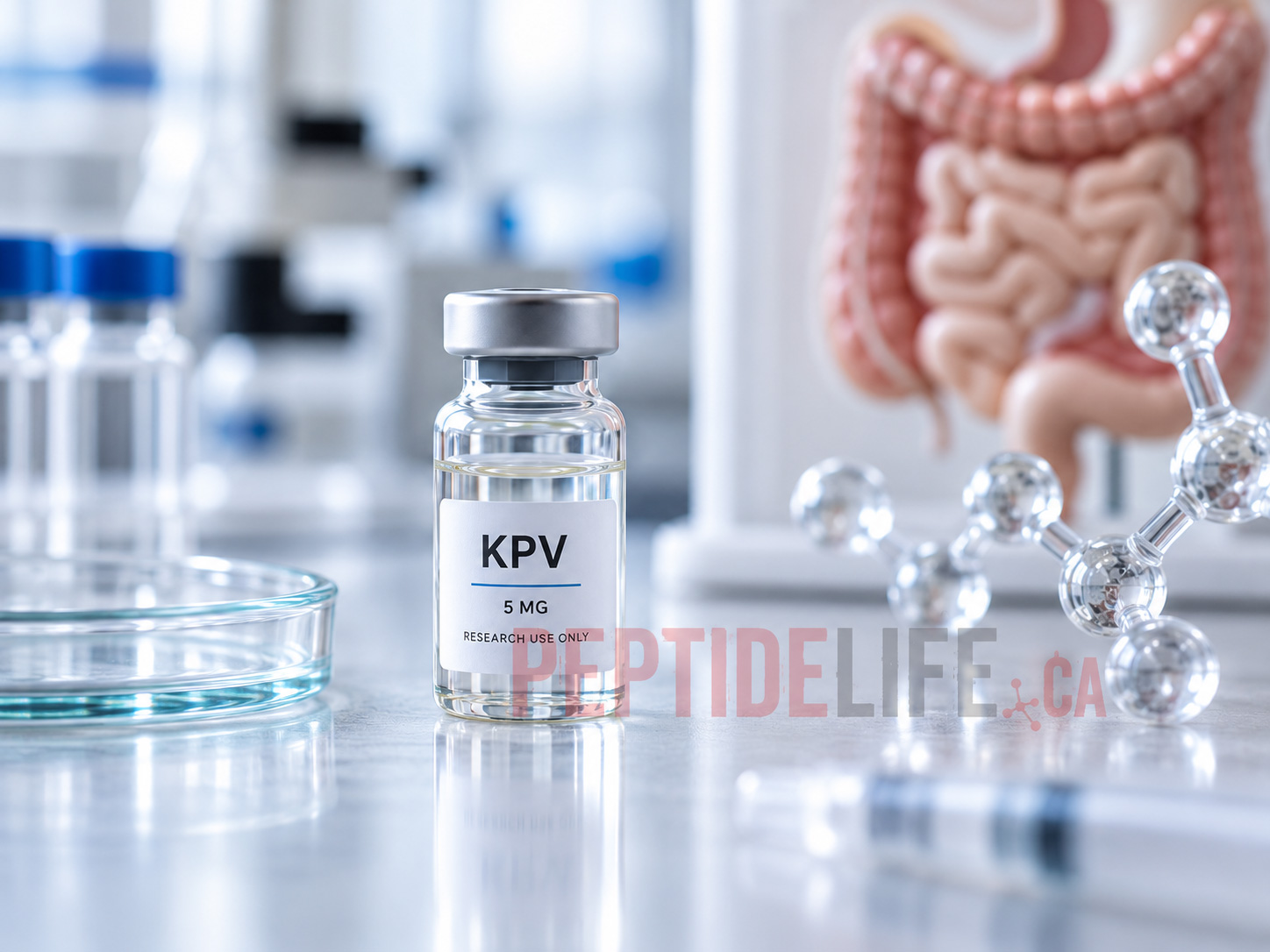
KPV isn’t as widely recognized as BPC-157 or TB-500, but it’s becoming an interesting name in peptide discussions, particularly when gut health and inflammation come up. Unlike many peptides associated with growth hormone or physical performance, KPV has attracted scientific interest for its ability to influence inflammatory activity. What makes KPV interesting is that researchers have investigated its effects directly in intestinal tissue, including animal models of inflammatory bowel disease. The findings have been encouraging enough to warrant further investigation, although most of the research remains preclinical.
What Makes KPV Different?
KPV stands for lysine-proline-valine, the three amino acids that make up this short peptide. It’s derived from the final three amino acids of alpha-melanocyte-stimulating hormone (α-MSH), a naturally occurring hormone involved in pigmentation and several other biological processes, including inflammation. Researchers discovered that this small fragment could retain some of the anti-inflammatory activity associated with the larger hormone without necessarily producing the same pigmentation effects.
That distinction is particularly interesting because KPV appears capable of influencing inflammation through more than one biological pathway. Research has examined its effects on inflammatory signalling within intestinal and immune cells, rather than focusing exclusively on traditional melanocortin receptor activity.
KPV and Gut Inflammation Research
Much of the early interest in KPV comes from research involving inflammatory bowel disease (IBD), including experimental models of colitis. A 2008 study published in Gastroenterology investigated how KPV interacts with intestinal cells and whether it could influence inflammatory activity. Researchers found that KPV could enter intestinal cells through PepT1, a transporter involved in moving certain small peptides across cell membranes. Once inside the cells, KPV reduced activity in inflammatory signalling pathways, including NF-κB and MAP kinase. These pathways are involved in regulating inflammatory responses, making them relevant targets for researchers studying intestinal disease.
The same study also examined KPV in mice with experimentally induced colitis. Researchers observed reductions in inflammatory markers and improvements in intestinal tissue compared with untreated controls. This was particularly interesting because KPV was administered orally in the experimental models. Peptides are often associated with poor oral bioavailability, but the findings suggested that KPV’s interaction with intestinal peptide transporters could be relevant to its local activity in the digestive tract. It’s important to distinguish this experimental finding from proof that commercially available oral KPV products work in people. The study demonstrated an effect under controlled research conditions, not established clinical effectiveness.
What Did Other KPV Studies Find?
Another study published in Inflammatory Bowel Diseases examined KPV in two different mouse models of colitis. Researchers reported reduced intestinal inflammation, improvements in tissue appearance and better recovery of body weight among KPV-treated animals. The study also investigated whether its effects depended entirely on the melanocortin-1 receptor (MC1R). Interestingly, some of KPV’s anti-inflammatory effects remained evident even when normal MC1R signalling was disrupted. This suggested that KPV might operate through additional mechanisms rather than relying exclusively on the receptor activity associated with its parent hormone.
Taken together, these studies provide a reasonable scientific explanation for why KPV continues to attract attention in gastrointestinal research. However, animal models cannot establish whether the same outcomes will occur in people with Crohn’s disease, ulcerative colitis or other intestinal conditions.
KPV Research Beyond the Digestive System
Although gut inflammation has been a major focus, KPV has also been investigated in skin-related research. A 2025 laboratory study examined how KPV affected human skin cells exposed to fine particulate matter, a form of environmental pollution associated with oxidative stress and inflammatory damage. Researchers found that KPV reduced several markers associated with cellular inflammation and oxidative stress. The experiment also included a three-dimensional skin model, where KPV showed protective effects against inflammation-related cell damage. This expands the scientific interest in KPV beyond intestinal tissue, although it doesn’t establish that KPV improves acne, eczema, skin healing or other conditions in humans.
There is also research exploring KPV-containing hydrogels and other delivery systems for wound-related applications. These approaches remain experimental, but they illustrate how researchers are investigating ways to deliver short peptides to specific tissues.
What About KPV in Humans?
This is where the evidence becomes much more limited. The most frequently cited KPV findings come from laboratory experiments and animal studies. There is currently no established body of controlled human clinical evidence demonstrating that KPV treats inflammatory bowel disease, improves gut symptoms or produces systemic anti-inflammatory benefits. An important unanswered question is how findings from local intestinal experiments translate to different formulations and delivery methods. A peptide producing measurable effects directly in intestinal tissue doesn’t automatically mean it will have the same activity when delivered another way.
The distinction matters because online discussions often group together oral, topical and injectable KPV despite the lack of clinical evidence establishing equivalent effects. In Canada, KPV is also among the unauthorized injectable peptides specifically identified in Health Canada’s public safety advisories. Its research potential should not be confused with authorization for medical use.
Why KPV Is Worth Following
KPV stands out because its scientific interest isn’t based solely on anecdotal reports. Researchers have identified mechanisms involving intestinal peptide transport, inflammatory signalling and measurable changes in experimental models of colitis. Its relatively small molecular structure and interaction with PepT1 make it particularly interesting from a drug-delivery perspective. Researchers are also exploring whether KPV-related formulations could have applications beyond the digestive system.
For now, the most compelling aspect of KPV is the biological research behind it, not a demonstrated treatment benefit in humans. Whether those laboratory findings eventually translate into useful clinical applications remains an open question. As research into inflammation and peptide-based therapies continues, KPV is certainly a compound worth keeping an eye on.
References
- Dalmasso G, et al. (2008). PepT1-mediated tripeptide KPV uptake reduces intestinal inflammation. Gastroenterology. View study on PubMed
- Kannengiesser K, et al. (2008). Melanocortin-derived tripeptide KPV has anti-inflammatory potential in murine models of inflammatory bowel disease. Inflammatory Bowel Diseases. View study on PubMed
- Lysine-Proline-Valine peptide mitigates fine dust-induced keratinocyte apoptosis and inflammation. (2025). View study on PubMed
Disclaimer: This article is for educational purposes and discusses experimental peptide research. KPV has not been established as a safe or effective treatment for the conditions discussed. Unauthorized injectable peptide products are not approved for sale in Canada. This content is not medical advice.