

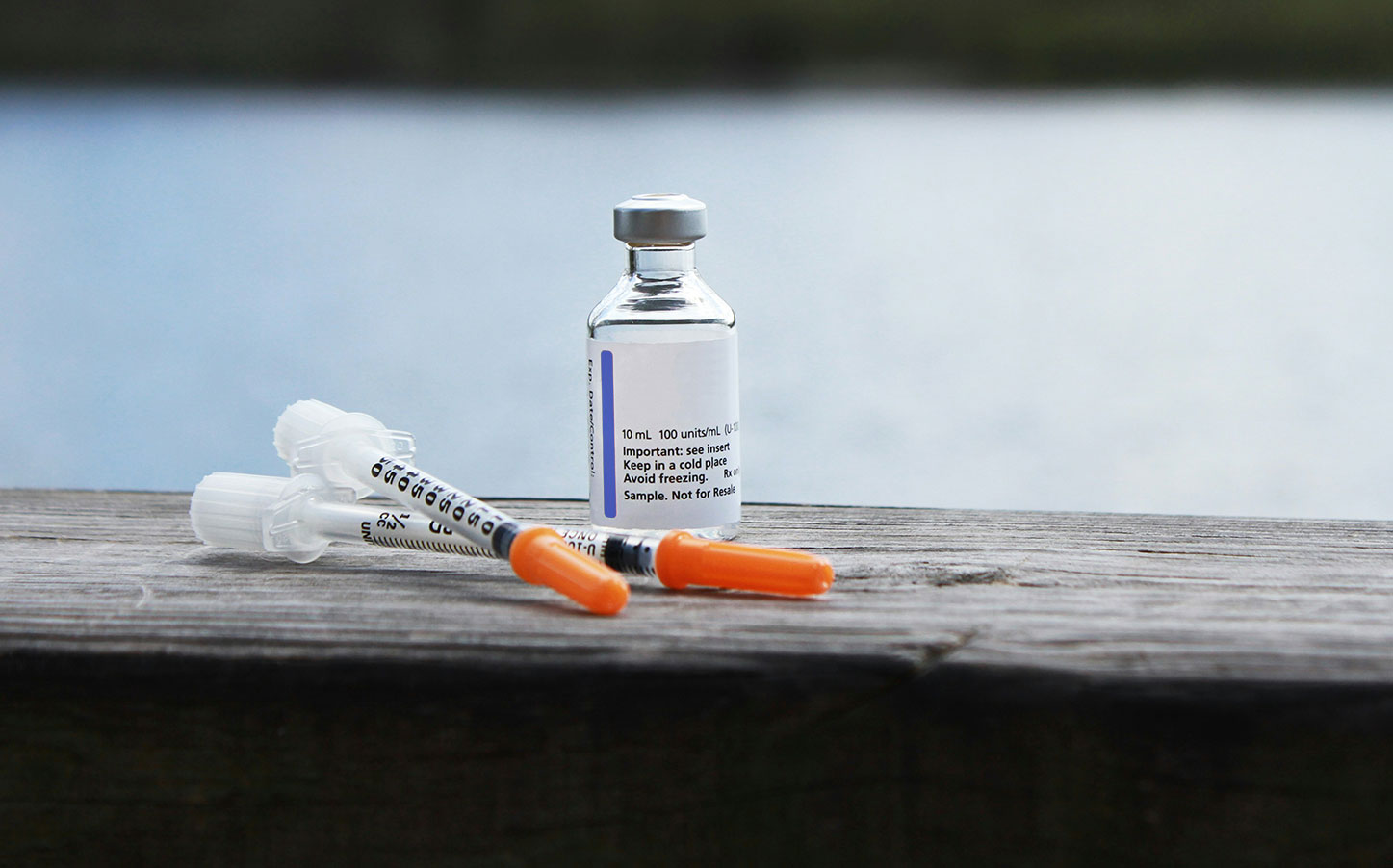
Insulin syringes, often referred to as insulin pins, are commonly used in medical and research settings where precise liquid measurement is required like peptide therapy. Understanding syringe sizes, unit markings, and basic safety principles helps reduce confusion and improve accuracy.
This article focuses on how insulin syringes are sized and read, along with general safety considerations. It does not cover injection technique, which should always be demonstrated by a qualified healthcare professional.
What Is an Insulin Syringe?
Most insulin syringes are designed for U-100 solutions, meaning:
- 100 units = 1 milliliter (1 mL)
This standardized measurement system allows for very small, precise volumes to be measured consistently.
Insulin syringes typically combine:
- A fine-gauge needle
- A low-volume syringe barrel
- Clear unit markings
Common Insulin Syringe Sizes
Insulin syringes come in different barrel sizes depending on how much volume needs to be measured.
0.3 mL Syringes
- Marked up to 30 units
- Ideal for very small, precise measurements
- Easier to read at lower volumes
0.5 mL Syringes
- Marked up to 50 units
- A balance between precision and capacity
1.0 mL Syringes
- Marked up to 100 units
- Useful when larger volumes are required
- Unit markings are closer together, which can reduce precision for very small doses
Choosing the smallest syringe that accommodates the required volume generally improves measurement accuracy however not ideal for the reconstitution process.
Needle Gauge and Length
Insulin syringes are available in several needle gauges, commonly ranging from 29G to 31G.
- Higher gauge numbers indicate thinner needles
- Thinner needles are typically associated with less tissue irritation
- Needle lengths vary (commonly 6–12 mm) and are selected based on medical guidance
Needle selection should always follow professional recommendations.
How to Read Insulin Syringe Units
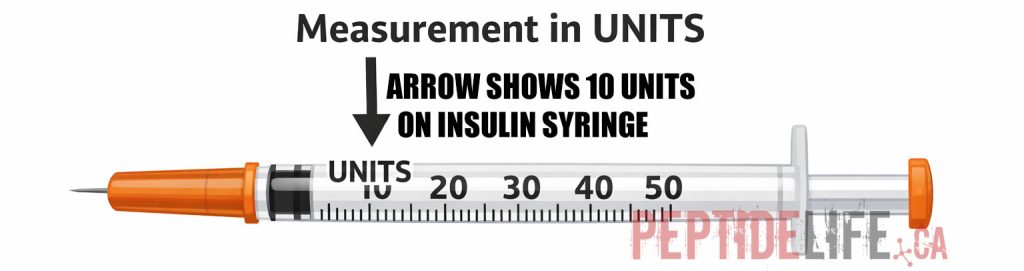
Most insulin syringes are U-100, meaning 100 units equals 1 milliliter (1 mL). The unit markings on the syringe represent volume, not dosage, and are read using the top edge of the rubber plunger (closest to the needle tip).
Smaller syringes (such as 0.3 mL) space unit markings farther apart, making them easier to read when measuring small volumes. Choosing the smallest syringe that accommodates the required volume can improve visual accuracy and reduce measurement errors.
Why Syringe Size Matters
Using a syringe that is too large for a small volume can make measurement less precise. Smaller syringes provide:
- Better visual accuracy
- More control when drawing liquid
- Reduced chance of measurement error
This is especially important when accuracy matters.
Single-Use and Safety Considerations
Insulin syringes are designed for single use only.
Important safety points:
- Needles become dull after puncturing vial stoppers
- Syringes and needles should never be reused
- Never share syringes or needles
- Dispose of used syringes in an approved sharps container
Reusing needles can increase the risk of contamination and tissue irritation.
Storage and Handling Basics
- Store unused syringes in a clean, dry environment
- Keep packaging sealed until use
- Avoid contact with non-sterile surfaces
Maintaining sterility is critical for safe handling.
Final Thoughts
Insulin syringes are precision tools designed to measure very small liquid volumes accurately. Understanding syringe sizes, unit markings, and basic safety principles helps reduce errors and confusion.
Injection technique and medical use should always be guided by a qualified healthcare professional.
Educational Disclaimer
This content is for informational and educational purposes only and does not constitute medical advice. Always consult a licensed healthcare professional for guidance on syringe selection and injection techniques.